Part 1
Going, Going, Gone! rules at a glance — rounds, winning, folding and settlement
How an NTE auction match works: 4-player sealed bids, each round's winning multiplier, folds and no-sales, and how entry fee, Bonus and Earnings add up.
How a match flows
Pick a hall; four players then bid at the same time, in secret each round, and the match ends the moment someone wins.
- Choose a hall (Shell, Coral, Pearl)
- the entry fee is deducted
- pick 1 character + 1 Device Set (or none)
- the board is revealed (board effect, court condition, storehouse board)
- bidding starts in round 1
- the match ends as soon as someone wins; otherwise it runs to round 5 (round 6 on a tie)
- settlement
- Four players take part. Each round everyone bids a whole-number amount at the same time, in secret. You bid afresh every round.
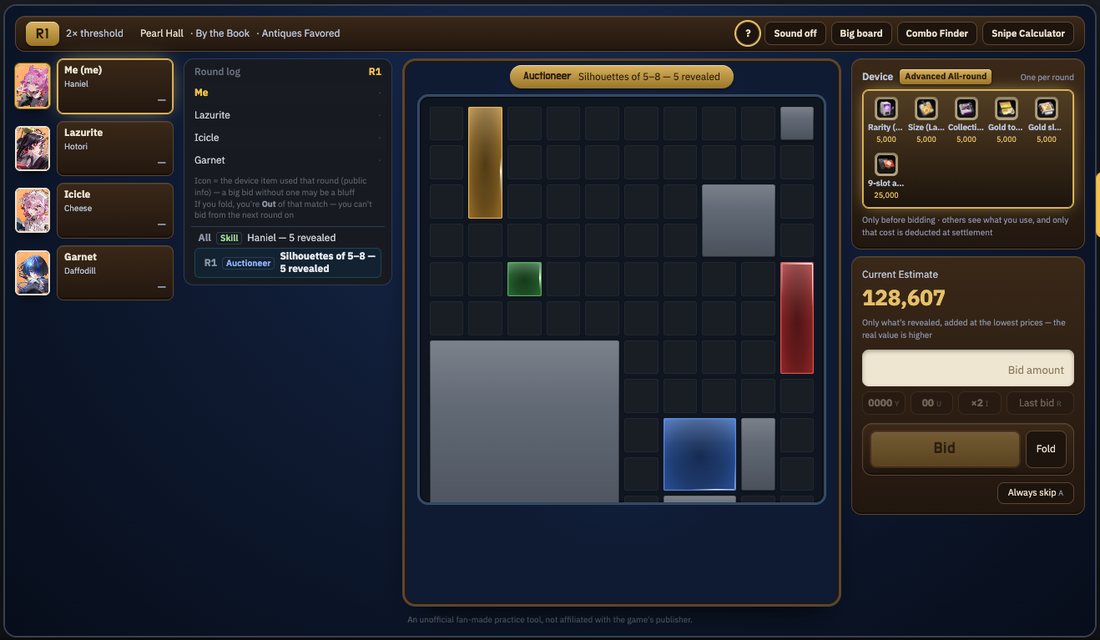 Auction Practice UI
Winning condition by round
In rounds 1–4 you must beat the top rival bid × the multiplier; in round 5 the highest bid simply wins.
- R1× 2
- R2× 1.6
- R3× 1.3
- R4× 1.1
- R5Highest bid
- R6Tied only
R1–R4 = beat the top rival bid × the multiplier · R5 = a unique highest bid · R6 = R5 ties only
- In rounds 1–4 the top bid must be unique and must exceed the second-highest bid × the round multiplier to win. The multipliers are 2× in round 1, 1.6× in round 2, 1.3× in round 3 and 1.1× in round 4.
- Example: if the top rival bid in round 1 is 150,000, you need 300,001 or more to win. 300,000 does not win.
- If nobody meets the condition, the round ends with no winner and play moves on. The storehouse stays the same; only the bids are made again.
- If two or more players tie for the top bid, rounds 1–4 end with no winner automatically.
- Round 5 has no multiplier. A unique highest bid wins outright.
- If the top bid in round 5 is tied, the match goes to round 6. Only the players tied in round 5 take part, each bidding at least their own round-5 amount (keeping it is allowed). A unique highest bid wins; another tie means no sale.
Folding and no sale
Folding means bidding 0 — fold once and you are out of the match.
- Folding is the same as bidding 0. Once you are out, you can't bid in later rounds.
- If all four players bid 0 in the same round, the match ends right there as a no sale.
- On a no sale nobody takes the storehouse, and the entry fee and any Device costs already spent are not refunded.
Settlement
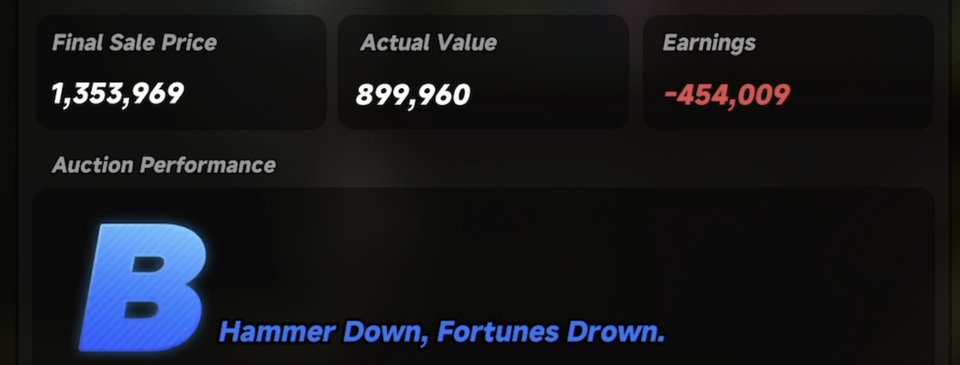
The winner's profit or loss is Actual Value − Final Sale Price; everyone else's comes down to the Bonus.
- Actual Value = the total price of the collectibles in the storehouse. If a court condition such as Double Up! applies, the multiplied value is used.
- Winner's Earnings = Actual Value − Final Sale Price − entry fee − cost of the Device items used that match.
 In-game
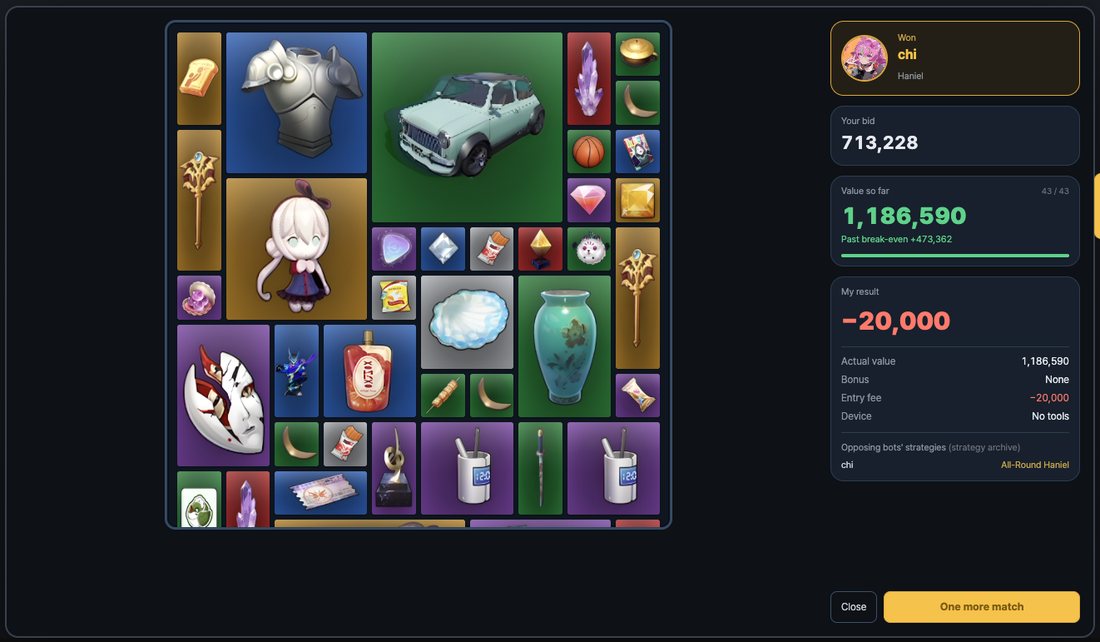 Auction Practice UI
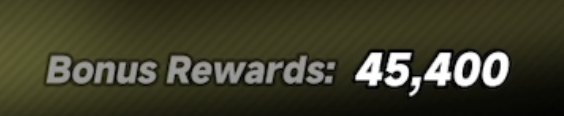
- Everyone else: if the winner takes a loss (Actual Value < Final Sale Price), each non-winner receives 10% of that loss as a Bonus — 30% under the Bonus Bonanza court condition. If the winner makes a profit, the Bonus is 0.
- Non-winner's Earnings = Bonus − entry fee − Device costs used.
 In-game
- Entry fee: Shell free · Coral 5,000 · Pearl 20,000.
Common mix-ups
The multiplier applies to the rival's bid, and Devices cost money only when you use them.
- The multiplier doesn't mean "my bid × multiplier": you have to beat the top rival bid × the multiplier. The Snipe Calculator does this math for you.
- Bringing a Device Set is free. Only the items you actually use are charged.
- In the win-rate stats, a "win" doesn't mean winning the lot — it means a match with Earnings above 0.
See also
Snipe CalculatorRound multipliers and snipe thresholdsAuction Practice